REVIEW · ARUSHA, TANZANIA
KILIMANJARO MACHAME ROUTE, (Climb 7days) “Whiskey” route
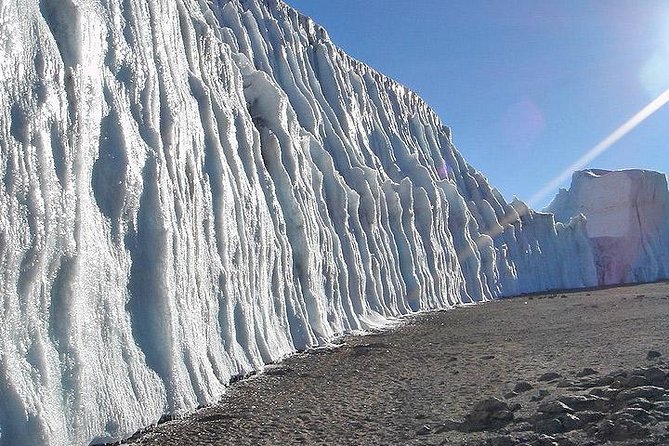
The mountain saves its hardest test for sunrise. This seven-day Machame Route climb gives you a classic Kilimanjaro ascent, moving from rain forest to heath, alpine desert, and finally the arctic summit zone. I like the route’s careful climb-high, sleep-lower pattern on Day 3, and I like that guide Paul and his team have earned praise for attentive care and dietary flexibility. The main drawback is the altitude: the summit day is long, cold, and mentally demanding, with a midnight start and no easy shortcut.
This is a private climb for your group, with pickup offered and mobile ticketing. The listed price is $2,564.11 per person, but you should confirm exactly what that amount covers before paying, since the supplied details do not spell out every inclusion. You also need a moderate fitness level and enough time for seven demanding days on foot.
Key points to know before booking
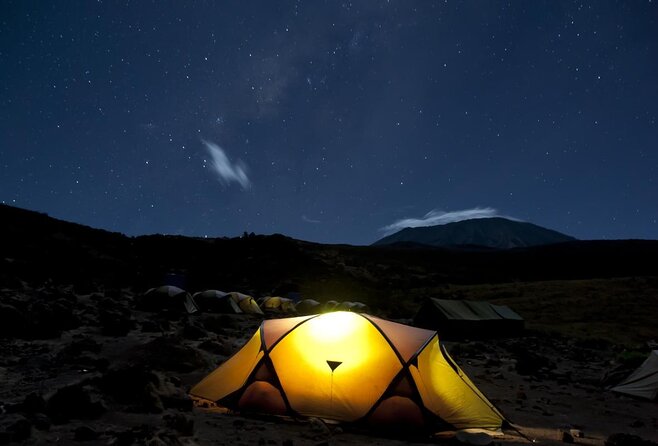
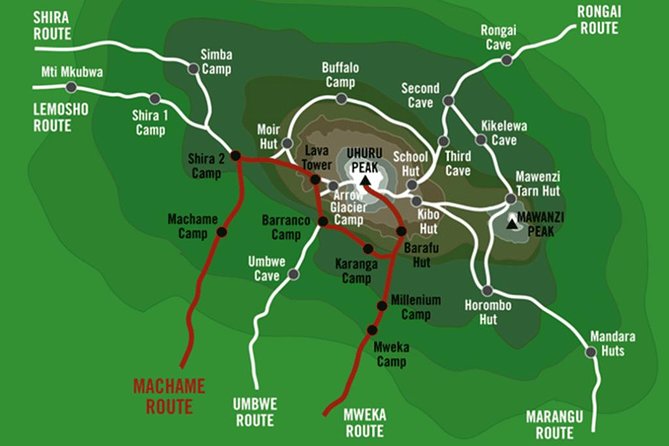
- Machame is the Whiskey Route: The trail begins in dense rain forest and finishes at Uhuru Peak, at 19,341 feet.
- Day 3 helps with acclimatization: You climb to 15,190 feet at Lava Tower, then sleep at about 13,044 feet in Barranco Camp.
- The Barranco Wall is steep but non-technical: You need steady footing and confidence, but no technical climbing is described.
- Summit day starts around midnight: The route from Barafu Camp to Uhuru Peak takes about 7 to 8 hours before a long descent to Mweka Camp.
- Paul receives the strongest praise: Past clients highlight his care, advice, team spirit, and ability to arrange gluten-free food.
- The final day returns by a different trail: You descend through rain forest to Mweka Gate, collect your certificate, and continue to Mweka Village for transport.
Why the Machame Route makes sense in seven days
The Machame Route is often called the Whiskey Route, a name that hints at its tougher profile compared with easier walking routes. Here, the route climbs sharply through several climate zones rather than following a gentle road-like path. That change is part of the appeal. In one week, you move from tropical forest to bare volcanic ground and then to snow, ice, and thin air near the summit.
I like the seven-day schedule because it gives you several days above 12,000 feet before the summit push. The route does not simply take you upward each day. On Day 3, you climb to Lava Tower, then descend to Barranco Camp. That extra time at a higher elevation can help your body adjust.
Still, seven days is not a casual mountain holiday. The listed walking times range from three hours to eight hours, and summit day combines a night ascent with a long descent. The distance figures also need careful reading. Day 6 lists five kilometers from Barafu to Uhuru Peak, followed by 12 kilometers to Mweka Camp, while the total effort is much greater than those numbers suggest because of the altitude and terrain.
A few more whisky tours around the world worth a look
- 7 days Kilimanjaro climb via Machame route (Whiskey route)
★ 5.0 · 16 reviews
Day 1: Machame Gate to Machame Camp through rain forest
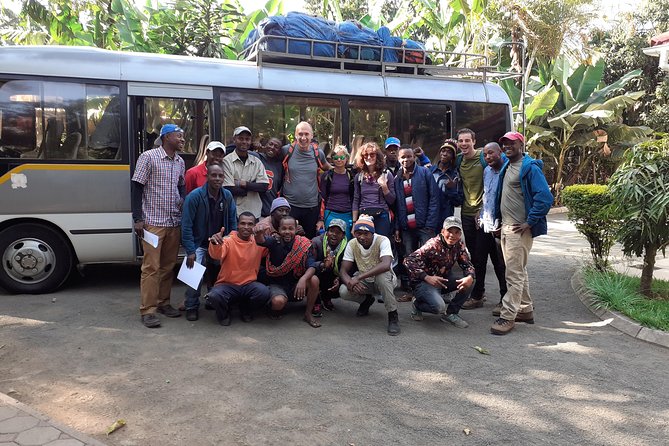
Your climb begins with a drive from Moshi to Machame Gate, which takes about 50 minutes. The road passes through Machame village on the lower slopes of Kilimanjaro before you enter the national park and begin walking.
The first trail section runs through dense rain forest. You follow a winding path up a ridge, with the vegetation forming a shaded green corridor around the route. The day covers about 11 kilometers, or seven miles, and takes roughly five to seven hours. You climb from 5,380 feet to 9,350 feet.
This is a useful first day because it gives you a proper introduction to the mountain without sending you straight into exposed high ground. The forest also makes the climb feel more sheltered, although wet conditions can make the path muddy. The day is listed as taking about 12 hours overall, which likely includes the transfer, gate procedures, and time at the park entrance.
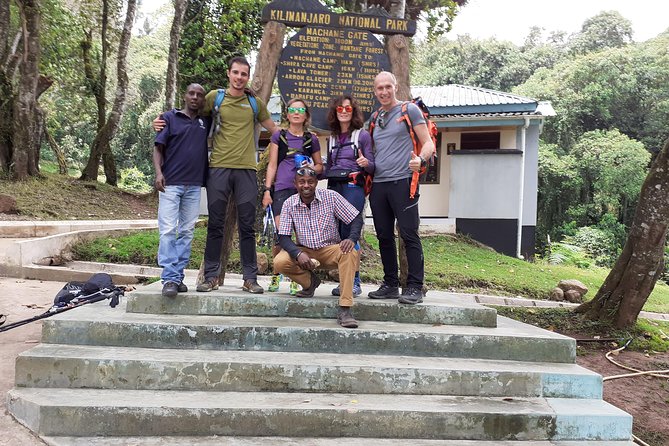
You should treat the gate as more than a photo stop. It marks the point where the climb changes from a road transfer into a serious walking trip. Keep your day bag organized before arrival so you are not searching for essentials once the group starts up the trail.
Day 2: Shira Plateau and the first high-altitude camp
From Machame Camp, the route leaves the forest and enters heath and open moorland. The path climbs toward a steep, rocky ridge before reaching the Shira Plateau. You then cross a large river gorge on the way to Shira 2 Camp.
This is a shorter walking day, about five kilometers, or three miles, with four to six hours on the trail. The elevation rises from 9,350 feet to 12,500 feet. The change in plant life is striking. The closed forest gives way to wider views and more open ground, and the mountain begins to feel less like a jungle walk and more like a high-altitude trek.
The short distance does not mean the day is easy. You gain more than 3,000 feet, and the thin air may be noticeable. Walk slowly and listen closely to the guides. On Kilimanjaro, saving energy here matters more than proving how fast you can climb.
Shira 2 also gives you an early taste of sleeping high. If you feel a headache, nausea, unusual fatigue, or other altitude symptoms, tell the guide rather than trying to hide it. The team’s experience is most useful when you give them clear information.
Day 3: Lava Tower, Barranco Wall country, and smart acclimatization
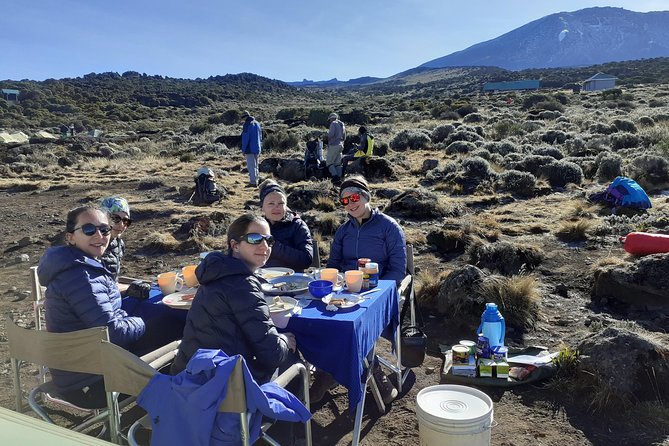
Day 3 is one of the most useful parts of the route. You climb from Shira 2 Camp at 12,500 feet to Lava Tower at 15,190 feet. The trail covers about seven kilometers and takes four to five hours.
Lava Tower is a roughly 300-foot volcanic rock formation. It gives the day a clear landmark and marks the highest point you have reached so far. From there, you descend three kilometers to Barranco Camp, at about 13,044 feet, in another two to three hours.
The day ends at nearly the same general altitude where it began, but the climb higher before sleeping lower is valuable. It gives your body time at 15,190 feet without making you spend the night at that height. This is the kind of route planning that makes the seven-day schedule worthwhile.
You pass through the Senecio Forest on the descent, an unusual high-altitude area with giant plants that make the route feel unlike an ordinary mountain walk. The official hiking time is about six hours, but the day can feel longer because of the altitude. I would keep your pace steady and avoid treating the Lava Tower ascent as a race.
Same region, a different dram:
- Edinburgh: The Scotch Whisky Experience Tour and Tasting
★ 4.7 · 5,213 reviews - Dublin: Jameson Whiskey Distillery Tour with Tastings
★ 4.7 · 4,859 reviews - Melbourne: Yarra Valley Wine, Gin, Whisky and Chocolate Tour
★ 5.0 · 3,667 reviews - Dublin Irish Whiskey Museum and Gallery Guided Tour with Tasting
★ 5.0 · 3,078 reviews
Day 4: The Barranco Wall and Karanga Camp
The Barranco Wall is the day’s headline feature. You first descend into a ravine, then climb the steep wall, which rises nearly 900 feet. The route is described as non-technical, but steep means steep. You will need balance, patience, and careful attention to where you place your feet.
Once over the wall, the trail crosses a series of hills and valleys before dropping sharply into Karanga Valley. One more steep climb takes you to Karanga Camp. The total distance is about five kilometers, with four to five hours of walking. The elevation changes only slightly, from 13,044 feet to 13,106 feet.
That small altitude gain is intentional. This is a shorter day meant to support acclimatization, not a day for piling on distance. The Barranco Wall may look intimidating, but the route does not call for ropes or technical equipment. You should still take your time, especially if heights or steep drops make you uneasy.
I like this day because it mixes a memorable physical feature with a relatively modest final elevation gain. It also gives you a chance to assess how your body is handling the altitude before the route turns toward the summit camps.
Day 5: Karanga to Barafu Camp and the final preparations
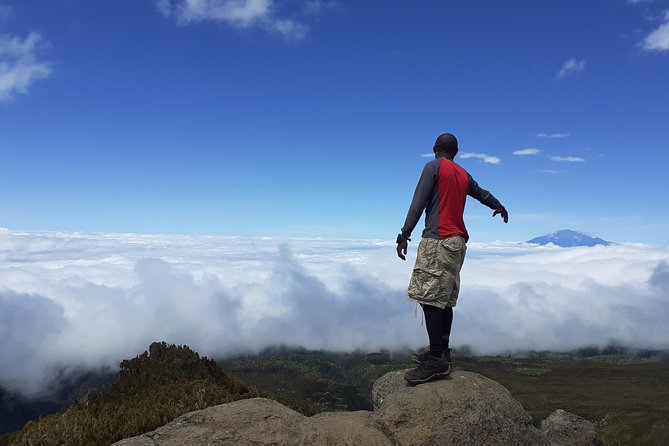
From Karanga Camp, you climb to the junction connecting with the Mweka Trail, then continue across rocky ground to Barafu Camp. The distance is only about four kilometers, or two miles, with four to five hours of hiking. The elevation rises from 13,106 feet to 15,331 feet.
The short distance can be misleading. At this height, even a few kilometers can take real effort. Barafu Camp is the launch point for the summit attempt, and the schedule calls for an early dinner followed by rest. That rest is not optional in spirit, even if sleep proves difficult.
From Barafu, you can see Mawenzi and Kibo, the two main peaks associated with Kilimanjaro. By this point, you have completed the Southern Circuit, which offers views of the summit from different angles. The surroundings become rocky and exposed, with little of the shelter you had in the rain forest.
Pack your summit-day items before lying down. Your headlamp, warm clothing, water, snacks, and personal essentials should be easy to reach. The climb starts around midnight, so you do not want to make decisions while tired and cold.
Day 6: Uhuru Peak at 19,341 feet
This is the day that defines the trip. You leave Barafu Camp around midnight and begin climbing in darkness toward Uhuru Peak. The ascent covers about five kilometers and takes seven to eight hours, but the cold, wind, darkness, and altitude make it much harder than the distance suggests.
The trail rises slowly, with frequent short breaks. Near Stella Point, at about 18,900 feet, you may see the sunrise over Mawenzi. It is one of the route’s great rewards, but you must earn it during the coldest and most tiring hours of the climb.
From Stella Point, you continue around the crater rim to Uhuru Peak, the highest point on Kilimanjaro, at 19,341 feet. The summit is in the arctic zone, so you should expect a very different setting from the rain forest where you started. The achievement comes with a cost: most of your effort is made while tired, cold, and short of breath.
After the summit, you descend 12 kilometers to Mweka Camp at 10,065 feet. That takes another four to six hours and returns you to rain forest. This descent is a major reason you need good fitness. Reaching the summit is not the end of the day.
Follow the guides’ pace and do not focus only on reaching the top. The support praised in the earlier climbs matters most here. Paul’s advice, along with the care of the wider team, can help you manage the long hours and changing conditions. You should also tell the team in advance if you require gluten-free food, since this has been handled successfully before.
Day 7: Mweka Camp to Mweka Gate
The last walking day descends from Mweka Camp at 10,065 feet to Mweka Gate at 5,380 feet. The route covers about ten kilometers and takes three to four hours through rain forest.
Lower down, the trail can be wet and muddy. Your final day may feel easy compared with the summit push, but tired legs and slippery ground still call for care. Trekking poles, if you use them, can be helpful here, though the provided information does not specify equipment supplied by the operator.
At Mweka Gate, you collect your summit certificate. You then continue for about another hour to Mweka Village, where a vehicle meets you for the drive back to your hotel in Moshi or Arusha.
The route finishes at a different point from where it began. That is useful because you do not retrace the entire climb, but it also means you should keep your transfer plans flexible. Pickup is offered, and the stated return arrangement is by vehicle from Mweka Village.
Guide support, food, and the private format
The strongest praise centers on Paul and his crew. One experienced climber who had climbed Kilimanjaro six times described Paul as the best of the guides used on three of those climbs. That is unusually specific praise, and it matters because repeated mountain experience can help with pacing, morale, and day-to-day decisions.
Another client said the team made the difficult climb feel easier than expected. A French-speaking client praised the caring staff, the food, and Paul’s advice, saying the group reached the summit in good condition. These comments point to the human side of the trip: a demanding climb becomes more manageable when the guide team pays attention and keeps you informed.
The food also receives a positive mention, including gluten-free meals. You should still state any dietary needs during booking and confirm how they will be handled. The available information does not give a full menu or list every meal included.
Because this is a private activity, only your group participates. That can be a real advantage if you want the pace and communication to stay focused on your own group. It may also mean the experience depends heavily on the group’s fitness and attitude. A private climb does not remove the physical challenge.
Is $2,564.11 good value?
At $2,564.11 per person, this is a substantial purchase, but Kilimanjaro costs are difficult to judge from the headline price alone. The value comes from the seven-day route, private format, pickup option, experienced guide team, park access shown in the schedule, and the support required for a summit attempt.
You should ask for a written list of inclusions before booking. The supplied details do not clearly state whether every meal, hotel night, transfer, park fee, equipment item, or gratuity is included. Do not assume that the price covers something simply because it is common on a Kilimanjaro climb.
The price may suit you if you want a private climb and place a high value on guide support. If your main goal is the lowest possible cost, compare the full package rather than just the advertised amount. A cheaper trip can become less useful if it has a shorter acclimatization plan or unclear transport arrangements.
Who should book this climb?
I would recommend this route to someone with moderate fitness who wants a serious, structured Kilimanjaro attempt and accepts that the summit day will be hard. It suits people who like a changing route, from forest to open moorland, volcanic rock, and high arctic ground.
It is also a good fit if you value a private group and direct contact with the guide team. Paul’s record of caring support, useful advice, and gluten-free food arrangements adds confidence.
I would hesitate to recommend it to anyone seeking a relaxed holiday, a short mountain walk, or a plan with little altitude exposure. The Barranco Wall is steep, the summit ascent starts around midnight, and the descent after Uhuru Peak is long. You need to be ready for cold, wind, tired legs, and a full week of sustained effort.
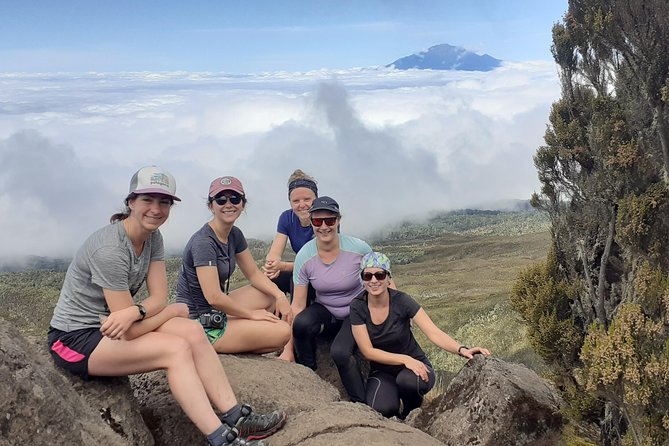
Book this climb if you want the classic Machame route and are prepared to respect the mountain’s pace. Before you commit, confirm the price inclusions, explain any dietary needs, and make sure your fitness matches the schedule. Those checks will tell you more than the attractive summit photo.
FAQ
Where does the Kilimanjaro Machame Route climb begin?
The climb begins at Machame Gate, reached by a drive of about 50 minutes from Moshi. The route finishes at Mweka Gate, followed by a walk to Mweka Village for transport back to Moshi or Arusha.
How long does the climb take?
The climb lasts approximately seven days. Daily hiking times range from about three to eight hours, with additional time needed for transfers, gate procedures, rest, and the summit schedule.
What is the highest point reached?
The highest point is Uhuru Peak, at 19,341 feet. The summit day begins around midnight from Barafu Camp.
Is the Barranco Wall a technical climb?
The Barranco Wall is described as steep but non-technical. You do not need technical climbing according to the supplied tour details, but you do need moderate physical fitness and careful footing.
Is this a private activity?
Yes. Only your group participates in the activity.
Is pickup available?
Yes. Pickup is offered, and the final transfer is described as leaving from Mweka Village for a hotel in Moshi or Arusha.
Can the team provide gluten-free food?
Gluten-free food has been successfully provided before. You should state your dietary requirement when booking and confirm the arrangements with the operator.
What is the cancellation policy?
You receive a full refund if you cancel at least six full days before the experience begins. Cancellation two to six full days before the start receives a 50 percent refund. Cancellation less than two full days before the start is nonrefundable. Weather or minimum-group cancellations may result in a different date or a full refund.
Just added around the world
- Hokkaido: Nikka Yoichi Whisky Museum Guided Tour & Tasting★ 4.7 · 4 reviews
- Tromsø: Local Whisky Tasting Experience★ 4.9 · 15 reviews
- VIP Skip-the Line Titanic Museum and Whiskey Tasting Tour★ 4.8 · 11 reviews
- Toronto Distillery District: Whisky Exploration Game and Tour★ 3.5 · 4 reviews
- Craigs Deluxe Whisky Tour Shore Trip from Port of Invergordon★ 5.0 · 2 reviews
- Yilan 1-Day Private Tour to Kavalan Whisky & Cultural Gems★ 4.5 · 3 reviews
- Private Tour to Yilan Kavalan Whisky Distillery★ 5.0 · 15 reviews
- Highland Whisky Distilleries Shore Trip from Invergordon Cruise Port★ 5.0 · 2 reviews
Whisky & Whiskey Tours, side by side.

Yarra Valley Wine, Gin, Whisky and Chocolate Tour
Our verdict →
Dublin Irish Whiskey Museum and Gallery Guided Tour with Tasting
Our verdict →
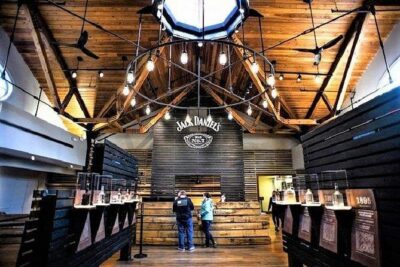
Nashville to Jack Daniel’s Distillery Bus Tour + Whiskey Tastings
Our verdict →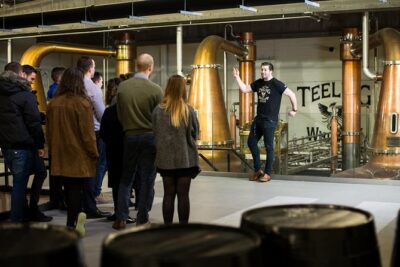
Dublin Teeling Whiskey Distillery Guided Tour and Tasting 1 Hour
Our verdict →