
REVIEW · BASSE-TERRE ISLAND, GUADELOUPE
Guided tour with tasting of the Distillery Bonne Mère
Rum begins with machinery, cane, and time. This 90-minute visit to Distillerie Bonne Mère brings all three together at Guadeloupe’s largest and oldest distillery, founded in 1863. I like the preserved railway bridge and copper columns, and I like that the working site also explains its eco-responsible methods. The main consideration is simple: the visit centers on rum, so it may feel less rewarding if you are not interested in distillation or tasting.
The tasting gives the tour a pleasant finish, with traditional Guadeloupe grands rums and vintage cuvées served in the rum cellar. The small maximum group of 20 should help keep the presentation manageable, and Pierre has even stepped in to provide the tour in English when needed. Still, language support may depend on who is leading your visit, so it is worth keeping that in mind.
Key points to know before you go
- A distillery founded in 1863: You visit one of Guadeloupe’s longest-running rum-making sites, not a newly built tasting room.
- An old railway bridge on site: This surviving structure shows how cane was once brought into the distillery.
- Copper distillation columns: The museum preserves major pieces of the equipment used during the distillery’s 160 years of activity.
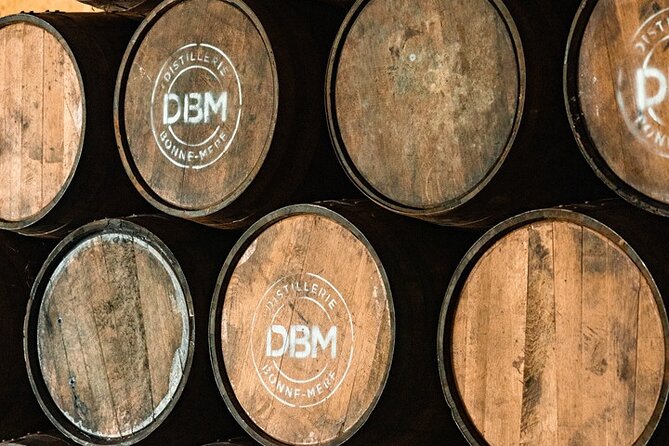
- A cellar with nearly 10,000 barrels: The final tasting takes place among a serious stock of aging rum.
- A short, focused visit: The tour lasts about 1 hour 30 minutes and includes the admission ticket and tasting.
- A well-regarded small-group format: The group limit is 20 people, and the experience carries a 4.9 rating from 81 reviews, with 99 percent recommending it.
Why Bonne Mère makes a good Guadeloupe stop
Sainte-Rose, on Basse-Terre Island, gives you a useful setting for learning about Guadeloupe’s rum industry. At Bonne Mère, the visit is not limited to a glass at the end. You walk through an industrial site where the history of production is part of the attraction.
I like that the distillery connects old methods with present-day concerns. You see physical reminders of earlier work, including an old railway bridge and copper distillation columns, while the presentation also points to eco-responsible practices. That combination gives the tour more substance than a simple brand tasting.
The site has been active for roughly 160 years. That does not mean every part of the original operation remains unchanged, but it does mean the museum can show how the distillery developed over a long period. If you enjoy places where tools and buildings explain the past, the museum portion should be more interesting than a standard product demonstration.
The tour also gives you a look at rum as a finished product. In the cellar, you will see the scale of the operation through nearly 10,000 barrels. That number helps explain why aging and storage matter. Rum is not simply distilled, bottled, and forgotten. Its final character depends in part on time spent resting in barrels.
More Distillery Tours in the world:
- Dublin: Jameson Whiskey Distillery Tour with Tastings
★ 4.7 · 4,859 reviews - Nashville to Jack Daniel’s Distillery Bus Tour + Whiskey Tastings
★ 5.0 · 1,906 reviews - Dublin Teeling Whiskey Distillery Guided Tour and Tasting 1 Hour
★ 5.0 · 1,765 reviews
Starting at 5000 Rue de la Distillerie
Your visit begins at Distillerie Bonne Mère, 5000 Rue de la Distillerie, Sainte-Rose 97115, Guadeloupe. The activity ends at the same meeting point, which keeps the outing easy to plan around other stops on Basse-Terre Island.
The tour uses a mobile ticket, and confirmation arrives when you book. You do not need to deal with a separate admission point listed elsewhere. That is a small detail, but it helps when you are arranging a day around driving, meals, or another attraction.
The maximum group size is 20. I would not call that an intimate private tour, but it is a reasonable cap for a distillery visit. A group of that size can move through the museum and cellar without becoming an unwieldy crowd. If you want a private tasting or a highly personalized appointment, this is not presented as that kind of outing.
The stated duration is about 1 hour 30 minutes. That makes Bonne Mère a practical half-day addition rather than a full-day commitment. You can learn about the production process, see the preserved equipment, and taste rum without giving up most of your day.
The distillation museum and 160 years of work
The museum is the heart of the educational part of the visit. Instead of hearing only about the brand’s current bottles, you can see remains connected to the distillery’s long working life.
The old railway bridge is one of the most distinctive details. Cane was transported through it, tying the physical site to the agricultural work behind rum production. A bridge may not sound as exciting as a barrel tasting, but it gives you a clear picture of how raw material once moved through the property.
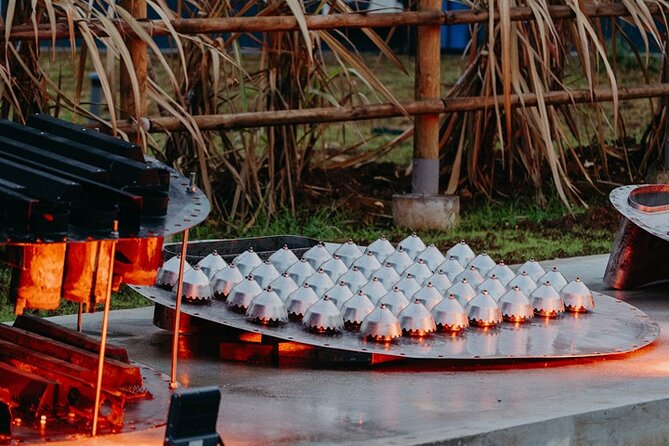
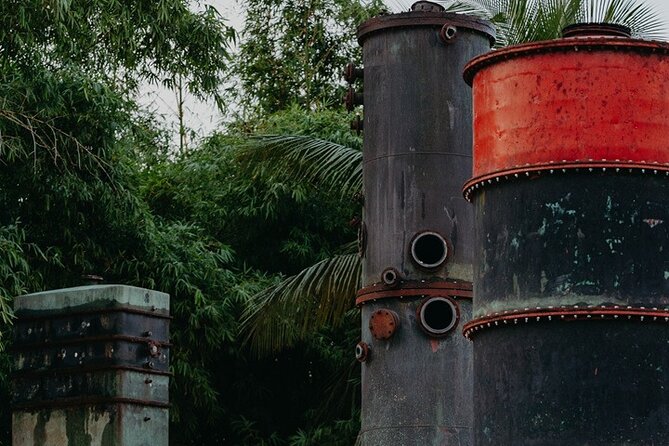
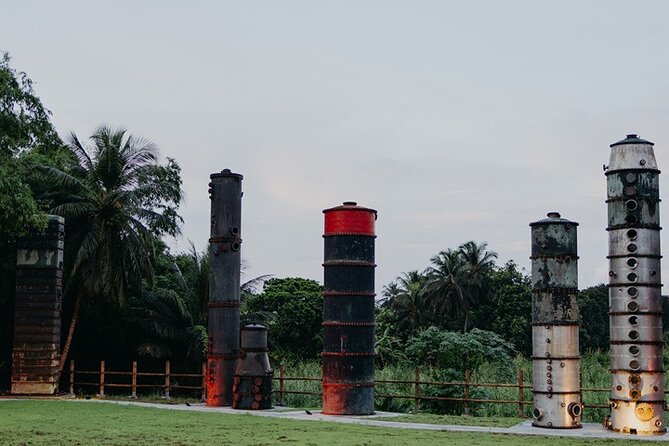
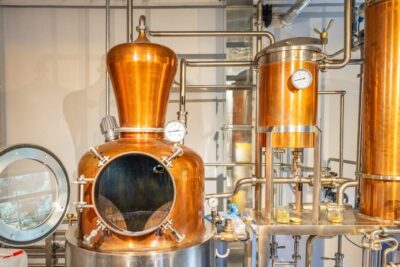
The copper distillation columns are another important feature. They show the equipment used to turn the cane-based product into rum. You may not leave with a technical understanding of every stage, but the machinery gives the explanation a solid anchor. You are looking at the tools, not just a diagram or a sales pitch.
I appreciate this part of the visit because it makes the process visible. You can ask yourself how cane entered the site, how distillation shaped the spirit, and how the product moved toward storage. The museum helps link those stages together.
The available information does not promise that every production area will be operating during your visit, so you should not assume a full behind-the-scenes factory tour. The wording points to an industrial site where each production stage is highlighted, along with a museum showing historic remains. That is a meaningful distinction. Expect interpretation and preserved equipment, but do not book solely on the hope of seeing every machine running.
Eco-responsible practices alongside old equipment
Bonne Mère presents itself as a pioneer in several eco-responsible practices. This gives the tour a modern angle that balances the older railway and copper equipment.
The supplied details do not list each specific practice, so I would avoid expecting a particular recycling system, energy source, or water project unless the guide explains it during your visit. What you can expect is a presentation that places current environmental efforts alongside the distillery’s long production history.
That contrast is useful. Old industrial sites can easily become static museums. Here, the message appears to be that tradition and present-day responsibility can exist in the same place. For you, the value is not just learning how rum was made in the past. You also get a chance to hear how a major distillery approaches its work today.
If eco-responsible production matters to you, pay close attention during this section and ask questions. The tour appears to treat those methods as an important part of the site, but the available description does not provide enough detail to judge their exact scope.
More Guided Tours in the world:
- Dublin Irish Whiskey Museum and Gallery Guided Tour with Tasting
★ 5.0 · 3,078 reviews - The Scotch Whisky Experience Guided Whisky Tour – An Introduction to Whisky
★ 4.5 · 1,578 reviews - The Dublin Liberties Distillery – Guided Tour and Whiskey Tasting
★ 5.0 · 150 reviews - Official Guided Distillery Tour and Whisky Tasting near Edinburgh
★ 5.0 · 72 reviews
Entering the cellar with nearly 10,000 barrels
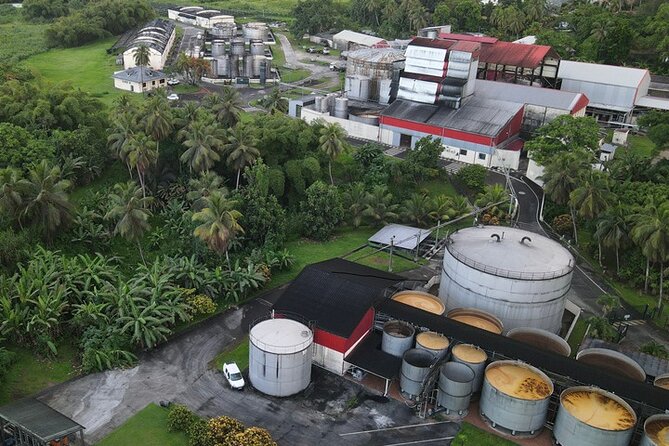
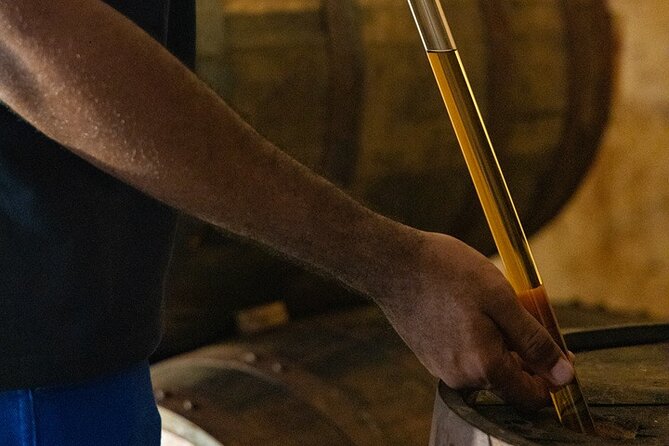
The cellar changes the mood of the visit. After the museum and equipment, you move into a storage space holding nearly 10,000 barrels. That is a striking number, and it gives you a sense of the scale behind the bottles you taste.
A barrel cellar also explains why rum tasting is more than a quick comparison of labels. The spirit spends time in storage, and the distillery’s vintage cuvées depend on that aging period. You do not need to be a rum expert to appreciate the sight of so many barrels gathered in one place.
This is likely the most memorable visual part of the tour, especially if you enjoy working cellars rather than polished retail spaces. The setting connects the product in your glass with a physical process happening around you.
The information does not specify how many barrels you will visit up close or how much time the guide spends inside the cellar. Still, the cellar is clearly a central stop, not a passing hallway on the way to the shop. Its inclusion helps justify the tour price because you are seeing a production and storage environment, not only receiving a few samples.
The final tasting of Guadeloupe rum
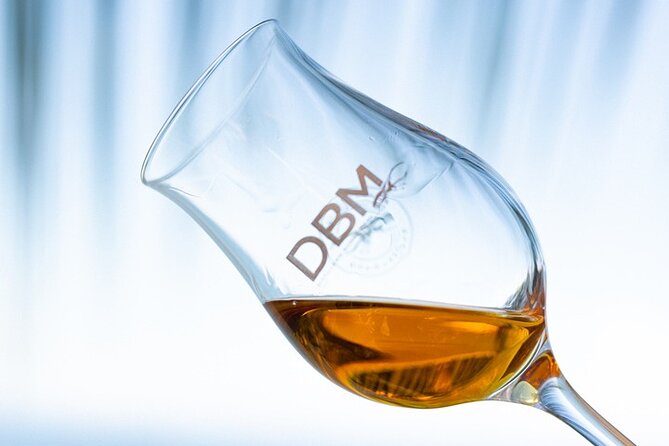
The tasting concludes the visit with traditional Guadeloupe grands rums and vintage rum cuvées. This is where the earlier explanations become practical. You can connect the museum equipment, the aging cellar, and the finished drink.
I like the order of the experience. Tasting first would make the visit feel like a sales appointment with a short talk attached. Here, you learn about the place before trying its products. That makes it easier to understand what you are tasting and why the cellar matters.
The tasting is described as refined, and the strongest praise focuses on its quality. One review calls the tasting perfect, while another highlights the friendly team and the clear explanations. Those comments suggest that the final portion is not rushed or treated as an afterthought.
You should remember that this is a rum tasting, not a full meal or a broad food pairing. The supplied details do not list the number of samples, the specific labels, or any snacks. If you need a substantial meal, plan that separately.
For anyone driving, the usual practical rule applies: arrange your day responsibly. The tour includes alcohol, but the supplied information does not give serving sizes or transportation arrangements. You should not assume a shuttle or designated driver service.
The guides and language question
The tone of the guide can shape a short tour, and the feedback here is especially positive about the presentation. The activity has been praised for clear explanations, a pleasant dynamic host, and a well-maintained setting.
Pierre is specifically worth noting. During one visit, he spontaneously continued as the guide in English. That is encouraging if you are not comfortable following a French-language tour, but it does not establish that every departure is guaranteed in English or that Pierre leads every session.
I would treat English support as possible rather than promised. If language is important to you, confirm it when booking or contact the provider before setting your schedule. The provider is Distillerie Bonne Mère, and the booking information confirms the activity at the Sainte-Rose site.
The small group limit should also help. With no more than 20 people, you have a better chance of hearing the explanations and asking a question than you might in a much larger commercial group. The reports of friendly staff add to the sense that the visit is handled with care.
Is the $10.74 price good value?
At $10.74 per person, this is an inexpensive cultural stop. The price includes admission to the guided experience and the tasting, and the visit lasts about 90 minutes. For a modest fee, you get a museum, historic industrial features, the large barrel cellar, and rum samples.
I see the best value for people who already plan to explore Basse-Terre Island and want a local stop with a clear connection to Guadeloupe’s production traditions. The price is low enough that you do not need the tour to occupy an entire day to feel worthwhile.
The value is less obvious if you are only looking for a drink. A bar or shop could serve rum more quickly, though it would not give you the old railway bridge, copper columns, or cellar context. You are paying for the explanation and the setting as much as for the tasting itself.
The high rating of 4.9 from 81 reviews and the 99 percent recommendation figure support the idea that the tour delivers what it promises. Those numbers cannot tell you whether you personally enjoy rum, industrial museums, or group tours, but they do point to a consistently well-received experience.
Who should book this visit?
I would recommend Bonne Mère to:
- Rum enthusiasts who want to see storage, distillation equipment, and vintage cuvées in one visit.
- Culture-focused visitors who prefer a working industrial site to a basic souvenir stop.
- Couples and small groups looking for a short activity with a tasting at the end.
- Visitors exploring Sainte-Rose and Basse-Terre Island who want an easy stop with a fixed duration.
- People interested in sustainable production who want to hear how an old distillery approaches current environmental concerns.
I would be more cautious if you dislike alcohol, have no interest in how spirits are made, or expect a long factory tour with every production stage operating in front of you. The visit appears strongest as a compact mix of history, machinery, storage, and tasting.
Service animals are allowed, and most people can participate. The available information does not provide detailed mobility notes, so you should ask the provider about any specific access needs before booking.
Cancellation is free if you cancel at least 24 hours before the local start time. Changes or cancellations inside that period are not accepted for a refund.
Should you book Distillerie Bonne Mère?
Yes, if you want a short and affordable look at Guadeloupe’s rum-making tradition. The old railway bridge, copper columns, museum, and nearly 10,000-barrel cellar give the visit real substance, while the tasting keeps it relaxed and enjoyable.
I would book it as part of a Basse-Terre day, not as the only reason to cross the island. Confirm the language situation if you need English, and remember that the exact tasting selection is not specified. For $10.74 and about 90 minutes, Bonne Mère offers unusually good value for anyone curious about how Guadeloupean rum is made and aged.
FAQ
Where does the Bonne Mère Distillery tour begin?
The tour begins at Distillerie Bonne Mère, 5000 Rue de la Distillerie, Sainte-Rose 97115, Guadeloupe.
Where does the tour end?
The activity ends back at the meeting point at Distillerie Bonne Mère.
How long does the tour last?
The tour lasts approximately 1 hour 30 minutes.
What is included in the visit?
The experience includes admission to the guided tour and a tasting of traditional Guadeloupe grands rums and vintage rum cuvées.
How much does the tour cost?
The listed price is $10.74 per person.
Is the ticket available on a phone?
Yes. The experience offers a mobile ticket.
How many people can join the tour?
The activity accepts a maximum of 20 participants.
Are service animals allowed?
Yes, service animals are allowed.
Can most people participate?
Yes. The information states that most people can participate.
Can I cancel for a full refund?
Yes. You can cancel at least 24 hours before the experience start time for a full refund. Cancellations or changes made less than 24 hours before the start time are not accepted for a refund.
Just added around the world
- Hokkaido: Nikka Yoichi Whisky Museum Guided Tour & Tasting★ 4.7 · 4 reviews
- Tromsø: Local Whisky Tasting Experience★ 4.9 · 15 reviews
- VIP Skip-the Line Titanic Museum and Whiskey Tasting Tour★ 4.8 · 11 reviews
- Toronto Distillery District: Whisky Exploration Game and Tour★ 3.5 · 4 reviews
- Craigs Deluxe Whisky Tour Shore Trip from Port of Invergordon★ 5.0 · 2 reviews
- Yilan 1-Day Private Tour to Kavalan Whisky & Cultural Gems★ 4.5 · 3 reviews
- Private Tour to Yilan Kavalan Whisky Distillery★ 5.0 · 15 reviews
- Highland Whisky Distilleries Shore Trip from Invergordon Cruise Port★ 5.0 · 2 reviews
Distillery Tours, side by side.
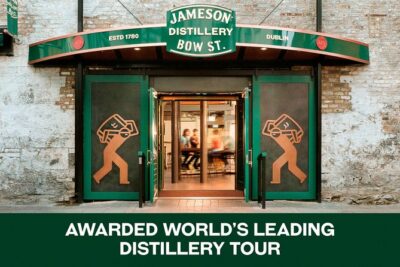
Dublin Jameson Distillery Bow St. Tour and Tasting 45 mins
Our verdict →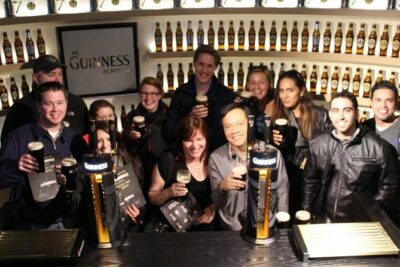
Dublin Jameson Distillery and Guinness Storehouse Guided Tour
Our verdict →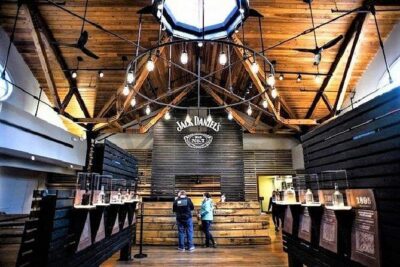
Nashville to Jack Daniel’s Distillery Bus Tour + Whiskey Tastings
Our verdict →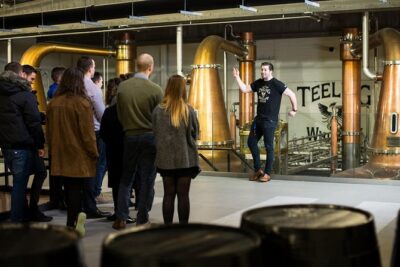
Dublin Teeling Whiskey Distillery Guided Tour and Tasting 1 Hour
Our verdict →
Other lists this dram sits on