
REVIEW · FRANCE
Workshop in Rozelieures Assemble your Whiskey
Whiskey gets personal in Rozelieures. This 2.5-hour workshop shows how a single malt moves from farm-grown barley to finished spirit, then lets you make your own blend. I like the farm-to-glass approach and the small-group format, capped at 12 people. I also like that the tasting leads to a bottle you create yourself, not just a souvenir picked from a shop shelf.
The main consideration is the price: $98.40 per person is a serious spend if whiskey is not your thing. You will get a full distillery visit, five tastings, expert help with blending, and your own bottle, but this is best for people who want more than a quick sample and a look around.
Key points at a glance
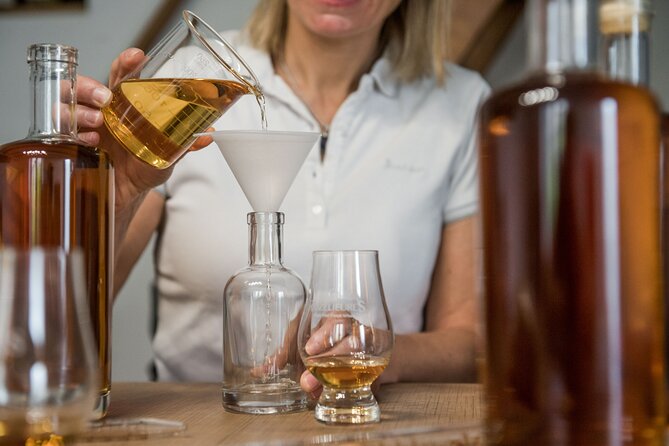
- Everything begins on the farm: Rozelieures grows its own barley and produces its single malt from the ground to the glass.
- The visit covers real production areas: You see the brewery, still room, distillery presentation, and an aging cellar.
- Five whiskeys set up the blending lesson: Tasting several styles gives you a practical basis for building your own recipe.
- Your bottle is the main souvenir: You leave with whiskey blended according to your own tastes.
- The group stays small: A maximum of 12 people allows room for questions and personal guidance.
- The workshop has a friendly tone: Clément, the blending host, is described as attentive to individual tastes, and multilingual guidance is available.
Why the Rozelieures farm-to-glass story matters
Many distillery visits focus on one attractive room, a few barrels, and a tasting at the end. Rozelieures offers a fuller picture. Since 2001, the operation has produced single malt whiskey from its own farm, giving you a chance to follow the drink through several stages rather than treating the bottle as a finished mystery.
The opening presentation covers the farm where the barley is grown. That detail gives the workshop a useful sense of place. You are not only hearing how whiskey is made in general. You are learning how this producer connects agriculture, brewing, distilling, aging, and blending.
I like this start because it gives meaning to everything that follows. When you later visit the brewery, you already understand that the grain is part of the distillery’s own production chain. When you reach the cellar, you can think about how the spirit changes after the still.
The farm setting also helps separate this experience from a standard tasting session. You are looking at a working producer with a clear connection between raw materials and the final drink. That is especially useful if you are new to whiskey and want a basic explanation without being buried in technical terms.
More Whisky Masterclasses in the world:
- Irish Whiskey Museum: Whiskey Blending Experience
★ 5.0 · 577 reviews - Dublin: Irish Whiskey Museum Blending Tour with Tastings
★ 4.6 · 378 reviews - Dublin: Irish Coffee Masterclass at the Irish Whiskey Museum
★ 4.6 · 279 reviews
The brewery and still room show the working process
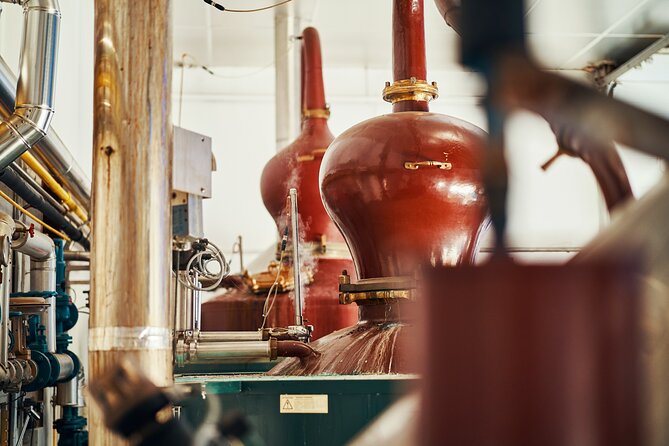
The next parts of the visit move into production. At the brewery, you can expect to see where the barley becomes a liquid ready for distillation. The still room then shows the next major stage, where the spirit is created and refined.
The attraction here is the order of the visit. You are not simply told that whiskey requires grain, fermentation, distillation, and aging. You move through the places linked to those steps. That physical sequence makes the process easier to remember.
The still room is likely to be one of the most visually interesting areas, but the value comes from the explanation around it. Distilling can seem mysterious when you only encounter the finished bottle. A guided look at the still room helps you understand that the final character starts developing long before the whiskey reaches a barrel.
The supplied information does not promise a long technical lecture or a chance to operate equipment, so I would keep expectations sensible. This is an educational visit, not a distiller training course. You are there to see, listen, taste, and then apply what you have learned during the blending session.
A sound and light show adds a change of pace
The distillery visit includes a sound and light show. This breaks up the more traditional production tour and gives the experience a visual presentation alongside the practical explanations.
I see this as a good feature for mixed groups. A serious whiskey enthusiast may focus on the equipment and aging details, while someone newer to the subject may appreciate a more atmospheric explanation. The show also gives the workshop a little variety during a 2.5-hour visit.
Still, the show is not the reason to book. The strongest parts are the production tour and the hands-on blending. Think of the presentation as a supporting element, not the central event. If you prefer a strictly technical distillery visit, this portion may feel less essential. If you enjoy seeing a story presented in a more memorable way, it should add some welcome color.
The aging cellar explains where patience enters
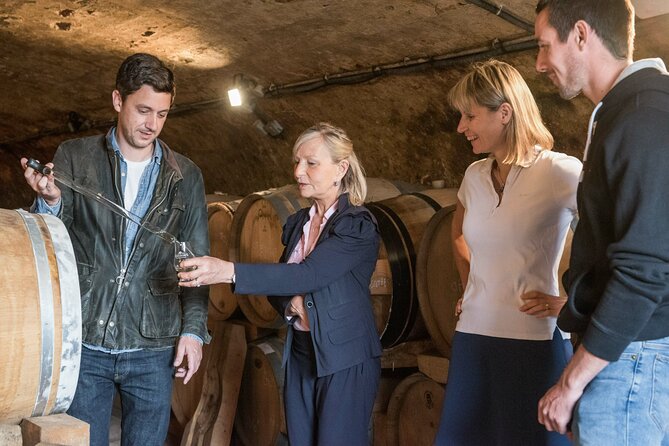
After the production areas, you visit an aging cellar for the whiskeys. This is where the story shifts from making spirit to waiting for it to develop.
A cellar visit matters because freshly distilled spirit is only part of the whiskey story. Aging changes the drink over time, and seeing the storage area helps you connect the finished samples with the barrels and the time involved. You can also use this stop to think about why different whiskeys may have different aromas, textures, and finishes.
The available details do not specify the number or type of barrels, the length of aging, or the temperature of the cellar. That means you should not book this expecting a highly detailed barrel inventory. What you do get is a useful link between the still room and the glass in front of you.
For me, this stop sets up the tasting well. Once you have seen the farm, brewery, still room, and cellar, the five whiskeys become more than five pours. You have a framework for considering how production and aging affect what you taste.
A few more whisky tours around the world worth a look
- Edinburgh: The Scotch Whisky Experience Tour and Tasting
★ 4.7 · 5,213 reviews - Dublin: Jameson Whiskey Distillery Tour with Tastings
★ 4.7 · 4,859 reviews - Melbourne: Yarra Valley Wine, Gin, Whisky and Chocolate Tour
★ 5.0 · 3,667 reviews - Dublin Irish Whiskey Museum and Gallery Guided Tour with Tasting
★ 5.0 · 3,078 reviews
Five whiskeys prepare you to blend
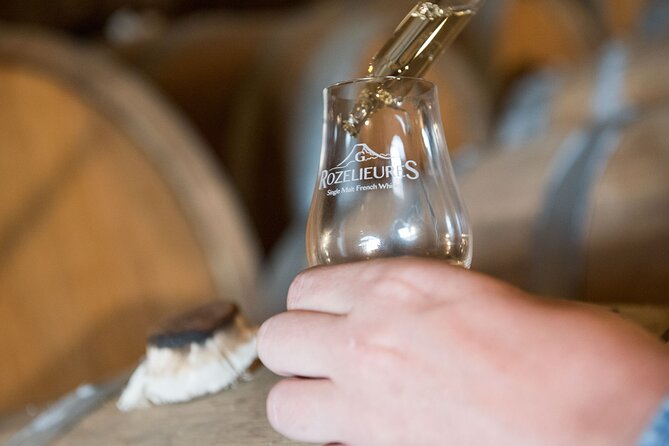
The tasting includes five whiskeys. That number gives you enough variety to compare samples without turning the workshop into a blur of glasses.
You can pay attention to differences in flavor and character, then decide which elements appeal to you. The point is not simply to identify a favorite. You are building a personal reference for the next stage, when you create your own blend.
This is where the workshop becomes more active. A normal distillery tasting asks you to sample what the producer has already chosen. Here, you get to use your preferences as part of the process. You may prefer a softer profile, a stronger character, or a balance between different samples. The exact blending method and whiskey proportions are not specified, so the host’s guidance becomes important.
Clément is identified as the blending host and is described as attentive to individual requests and tastes. That is a valuable detail. You are not left alone with five samples and a guess. The workshop has a person helping you make sense of your choices.
The guidance is also described as friendly, professional, and multilingual. That can make a real difference in a technical tasting, especially when flavor descriptions and blending instructions are involved. The exact languages are not stated, so do not assume a particular language beyond the multilingual assistance noted in the experience details.
Your own bottle is the workshop’s best souvenir
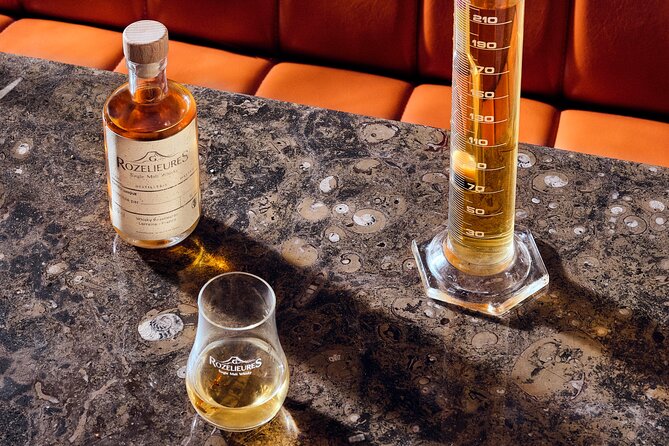
The final product is a bottle of your own self-blended whiskey. This gives the $98.40 price more weight than a simple admission fee.
You are paying for a guided visit, production explanations, five tastings, and a practical activity that ends with something you can take home. The bottle also carries a story. You can remember which samples you preferred, what advice you received, and how your blend came together.
One especially appealing point is that the whiskey comes from the same farm and distillery you have just visited. Your souvenir is tied directly to the place, rather than being a generic regional purchase. It is also a more personal gift for friends or family, assuming they enjoy whiskey.
The tradeoff is that the value depends heavily on your interest in the drink. If you do not enjoy whiskey, the bottle may not justify the cost. If you like tasting, comparing, and making choices, the workshop offers much more than a retail bottle at the end.
The activity has a playful side too. The blending workshop is described as fun and good-natured, with active participation from the group. That makes it suitable for a pair of friends, a couple, or a small group looking for something more hands-on than sightseeing.
Small groups make the tasting more useful
The maximum group size is 12 people. That is small enough for the experience to feel personal without requiring a private booking.
Small numbers matter most during the blending session. You have a better chance of hearing the host clearly, asking questions, and getting help with your own preferences. A larger group could make a tasting feel rushed or turn the blending into a demonstration that you watch from the side.
The group size may also shape the social mood. The workshop is designed for participation, and the supplied feedback describes good involvement from everyone. You should expect a shared activity rather than a silent cellar tour.
At the same time, a group of up to 12 is not a one-on-one lesson. If you want a completely private session, the available details do not promise one. The small-group size is a practical middle ground: personal enough for guidance, social enough to keep the workshop lively.
Timing, meeting point, and planning advice
The experience lasts about 2 hours and 30 minutes. That is long enough to cover the farm, brewery, still room, sound and light presentation, aging cellar, tasting, and blending without being an all-day commitment.
The tour begins and ends at 16 Rue Capitaine Durand, 54290 Rozelieures, France. Since no transportation is included in the supplied details, you should plan your route to the meeting point yourself and allow enough time to arrive before the start.
A mobile ticket is provided, which is useful when you are moving through France with several bookings on your phone. Confirmation arrives at the time of booking, so you can keep the meeting details with your other travel plans.
Bookings are made on average 14 days in advance. That is a useful sign that you should not wait until the last minute if the workshop fits a fixed schedule. You can cancel for a full refund up to 24 hours before the start time. Changes or cancellations made inside that 24-hour window are not accepted for a refund.
Service animals are allowed. The activity ends back at the same meeting point, which keeps the logistics simple after the tasting and bottle collection.
Who will enjoy this workshop most
I would choose this experience if you want to understand whiskey by seeing how it is made and then testing your own judgment. It suits people who enjoy local food and drink, hands-on activities, and small producers with a direct connection to their ingredients.
It is also a good pick for a whiskey fan who has already done standard tastings. The five samples and blending stage give you something to do with your palate, rather than simply listening to a presentation.
Couples and small groups should find the format easy to enjoy. The process is social, and the final bottle gives everyone a concrete memory of the visit. It could also work for someone who knows little about whiskey, since the production tour builds the basics before the tasting.
I would think twice if you dislike strong spirits, do not want to drink during a tour, or mainly want a quick look at a distillery. The session lasts 2.5 hours and places real emphasis on tasting and blending. That is the appeal, but it is also the reason it will not suit every schedule or palate.
Is the $98.40 price fair?
At $98.40 per person, this is not a cheap stop-in tasting. The value comes from the number of elements packed into the visit: a farm presentation, brewery and still room visits, a sound and light show, an aging cellar, five whiskeys, personal blending, and a bottle to take home.
You should also factor in the small group and the help with creating your blend. The final bottle gives you something beyond the two and a half hours on site, although the supplied information does not state its size or retail value.
For someone who already plans to buy a whiskey souvenir, the workshop can make that purchase more meaningful. For someone who only wants to sample one or two pours, the price may feel high. I would treat it as a full producer experience, not as a simple tasting fee.
Should you book the Rozelieures whiskey workshop?
Book it if you want a personal look at how French single malt is made, enjoy tasting several whiskeys, and like the idea of leaving with a bottle built around your own preferences. The farm connection, five-whiskey tasting, attentive blending help from Clément, and group limit of 12 give the experience a clear purpose.
Skip it if your interest ends after a quick sample or if $98.40 is more than you want to spend on a drink-focused activity. For the right visitor, though, the self-blended bottle turns a distillery visit into a souvenir you can keep enjoying at home.
FAQ
Where does the workshop take place?
The workshop starts at 16 Rue Capitaine Durand, 54290 Rozelieures, France.
How long does the experience last?
The workshop lasts approximately 2 hours and 30 minutes.
Where does the activity end?
The experience ends back at the meeting point at 16 Rue Capitaine Durand.
How much does the workshop cost?
The listed price is $98.40 per person.
How many people can join the workshop?
The activity has a maximum of 12 participants.
What whiskey-related activities are included?
You visit the farm, brewery, still room, distillery presentation, and an aging cellar. You also taste five whiskeys, create your own blend, and leave with a bottle of your own whiskey.
Is a mobile ticket available?
Yes. The experience includes a mobile ticket, and confirmation is received at the time of booking.
What is the cancellation policy?
You can cancel at least 24 hours before the start time for a full refund. Cancellations or changes made less than 24 hours before the start time are not accepted for a refund.
Just added around the world
- Hokkaido: Nikka Yoichi Whisky Museum Guided Tour & Tasting★ 4.7 · 4 reviews
- Tromsø: Local Whisky Tasting Experience★ 4.9 · 15 reviews
- VIP Skip-the Line Titanic Museum and Whiskey Tasting Tour★ 4.8 · 11 reviews
- Toronto Distillery District: Whisky Exploration Game and Tour★ 3.5 · 4 reviews
- Craigs Deluxe Whisky Tour Shore Trip from Port of Invergordon★ 5.0 · 2 reviews
- Yilan 1-Day Private Tour to Kavalan Whisky & Cultural Gems★ 4.5 · 3 reviews
- Private Tour to Yilan Kavalan Whisky Distillery★ 5.0 · 15 reviews
- Highland Whisky Distilleries Shore Trip from Invergordon Cruise Port★ 5.0 · 2 reviews
Whisky Masterclasses, side by side.
Irish Coffee Masterclass at the Irish Whiskey Museum
Our verdict →
San Francisco Whiskey Cocktail Class: Views and City History
Our verdict →
Premium Tennessee Whiskey Workshop: Cocktails Stories and Culture
Our verdict →Other lists this dram sits on