

REVIEW · TORONTO
Toronto: Distillery District Historic Walking Tour
Toronto’s whiskey past is bigger than you think. This one-hour walk brings the Distillery District’s brick buildings and cobblestones into focus, linking Gooderham & Worts to the growth of a young, unruly city. I like the chance to see parts of buildings that are not always open to the public, and I like that the tour explains how the lakefront once sat much closer to the distillery. The main drawback is its short length: you get a lively introduction, not a full afternoon of Toronto history.
The $20 price is fair for a professional guide and an hour of focused storytelling, especially if you already plan to eat, shop, or look at galleries afterward. Just note that this is a history walk, not a tasting tour. If you want spirits samples, book the separate Prohibition & Spirits Walking Tour.
Key points at a glance
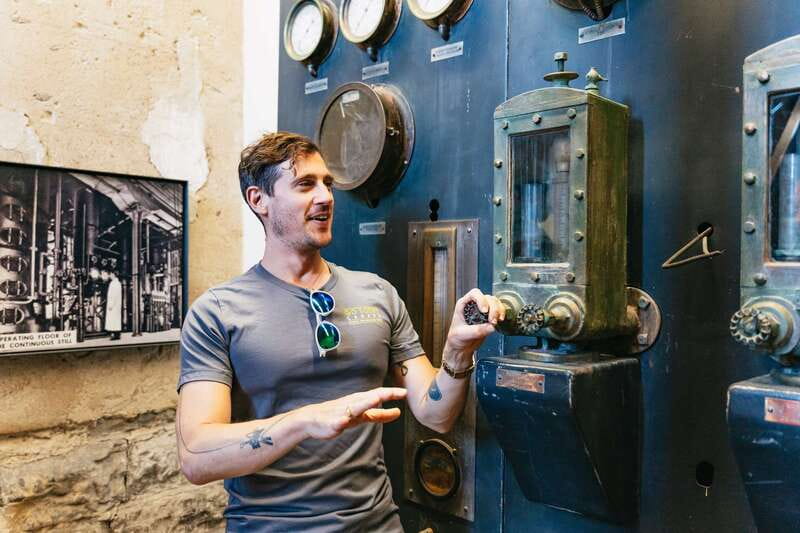
- Gooderham & Worts takes center stage: Learn how a local distillery grew into one of the world’s largest.
- Rare interior access may be possible: Some tours include a look inside buildings beyond the usual public route.
- Toronto’s early years get messy: Expect stories about liquor, business deals, social change, and a famously intoxicated young city.
- The setting is part of the experience: Victorian industrial buildings now hold restaurants, bars, boutiques, galleries, theaters, and outdoor art.
- A short, easy walk: The tour lasts one hour, is generally suitable for ages 10 and up, and is wheelchair accessible.
- Guide quality is a major strength: Eric, Erik, Nicole, Devin, Tom, Sarah, and others have been praised for humor, energy, clear explanations, and thoughtful answers.
Why this short Toronto walk is worth your time
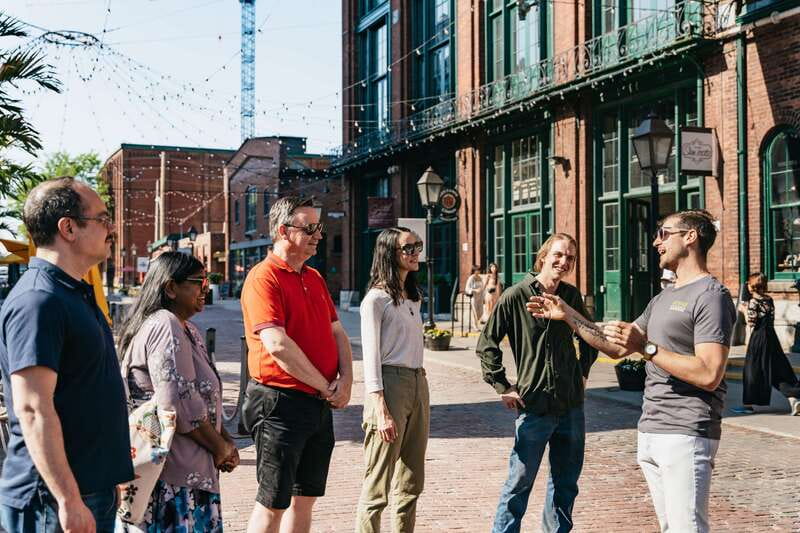
The Distillery District can look like a polished entertainment quarter at first glance. Its cobblestones, restored brick walls, public sculptures, restaurants, and independent shops make it an easy place to enjoy without a plan. Yet the area makes far more sense once you understand what it was built to do.
This tour gives you that missing layer. The buildings were not designed as a pretty backdrop. They were part of a major industrial operation that processed grain, produced spirits, employed workers, and helped shape Toronto’s economy. You will hear how the Gooderham and Worts families built their company, how the distillery reached its peak, and how changing times eventually brought its production era to an end.
I especially like the way the tour connects the district to the city beyond its walls. The story is not only about whiskey. It includes business intrigue, working life, the role of women in the company, the changing shoreline, and the rough social world of early Toronto. One guide also explained that the operation produced antifreeze, a useful reminder that this was a large industrial business rather than a quaint old brewery.
The walk is easy, but you should still wear comfortable shoes. Cobblestones can be less forgiving than smooth sidewalks, and you will spend the hour outside and inside as the route allows.
More Distillery Tours in Canada:
- Toronto Distillery District Walking Tour
★ 5.0 · 327 reviews - 30-Minute Distillery District Segway Tour
★ 5.0 · 214 reviews - Quebec City: Honey and Distillery Tour with Tasting
★ 4.9 · 103 reviews
Meeting at 11 Gristmill Lane
You check in at the Go Tours Canada office at 11 Gristmill Lane, inside the Distillery District. The meeting point is near the red heart at Parliament Street and Mill Street. Give yourself enough time to find the office, since the district has several lanes and entrances and the meeting location is not simply a single street corner.
The tour starts and finishes at the Go Tours Canada location. That makes planning simple. You can arrange lunch, a drink, shopping, or more sightseeing in the district after the walk without needing to cross Toronto to another neighborhood.
Bring comfortable shoes, a camera, and a passport or ID card. The stated walking level is easy, and the tour is wheelchair accessible. It is generally recommended for people aged 10 and older, making it a reasonable choice for families with older children who can follow a history-focused walk.
The guide speaks English. If you need another language, this is not the right tour based on the available information.
The first look at Toronto’s Victorian industrial quarter
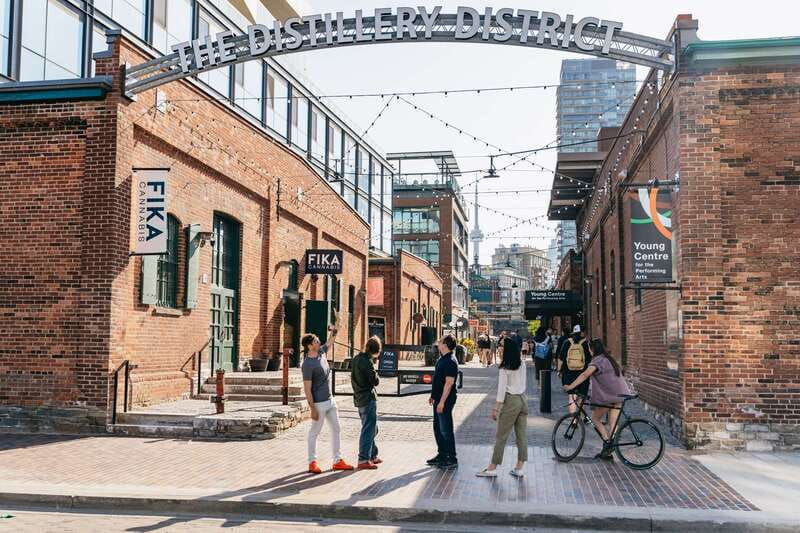
The opening part of the tour helps you read the district’s architecture. You will see the dense collection of Victorian industrial buildings that gives the area its particular feel. Red brick, old masonry, heavy walls, and functional structures tell you this was a workplace built around production and storage.
That architecture is more than decoration. Industrial buildings had to handle heat, machinery, grain, barrels, workers, and large quantities of alcohol. The practical design explains why the district feels so different from Toronto’s modern glass towers, even though it sits within the same downtown city.
One particularly memorable detail from the guiding is a white building with walls about a meter thick. That kind of construction makes the old operation easier to imagine. Instead of viewing the district as a collection of attractive façades, you begin to see a place designed for security, storage, and industrial work.
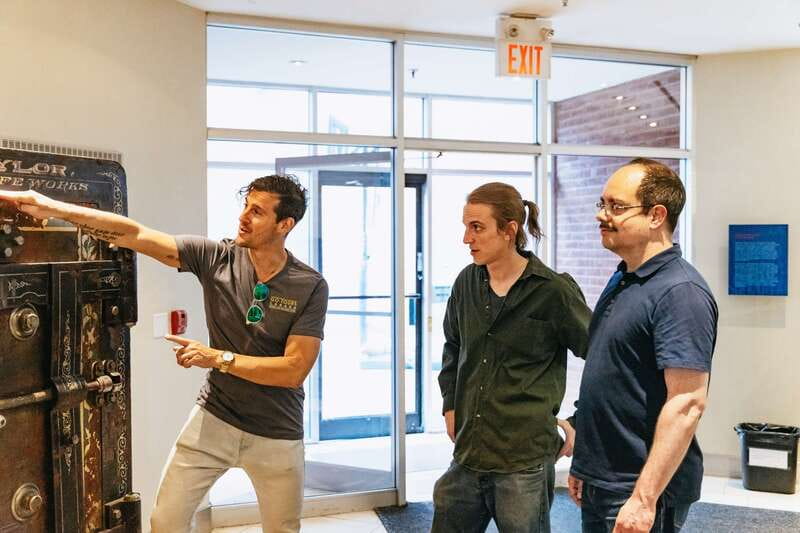
The tour also offers the possibility of seeing interiors that ordinary visitors may not reach. Access can depend on the route and conditions, so you should not assume that every room will be open. Still, this is one of the strongest reasons to take a guided walk instead of simply wandering the lanes on your own.
Gooderham & Worts and Toronto’s liquor economy
The central story follows Gooderham & Worts from its rise to its eventual decline. The company grew alongside Toronto itself, and the guide explains how the distillery became a major force in the city and, at one point, the largest distillery in the world.
That scale changes how you see the district. The operation was not a small local maker producing a few barrels for nearby customers. It was a major company with families, workers, commercial interests, and influence over the surrounding city.
The tour also covers the company’s fall from grace. The distillery continued operating until 1990, a surprisingly recent date for visitors who assume the buildings stopped being useful long ago. Learning that production ended only in 1990 helps connect the preserved structures to living memory rather than placing them safely in the distant past.
I like this rise-and-fall structure because it gives the hour a clear shape. You are not simply collecting dates or admiring brickwork. You are following a business through success, expansion, changing conditions, and closure.
The guide’s personality matters here. Eric and Erik have been praised for energy, humor, and detailed explanations. Nicole has been described as friendly and patient, including on tours with only one participant. Devin has been singled out for bringing the working atmosphere of the old distillery to life. These comments point to a useful quality: the best guides turn company history into a story you can follow rather than a list you must remember.
More Whisky Walking Tours in Canada:
- Toronto: Distillery District Breakfast Walking Tour
★ 5.0 · 10 reviews - Toronto: Distillery & Old Town Private Walking Tour
★ 4.3 · 7 reviews - Louisville: Private Guided Food, Bourbon & History Walking Tour
★ 5.0 · 45 reviews - Dublin 6 Whiskey Tasting & 3 Food Pairing Walking Tour with Local
★ 5.0 · 42 reviews
Toronto’s early wild years
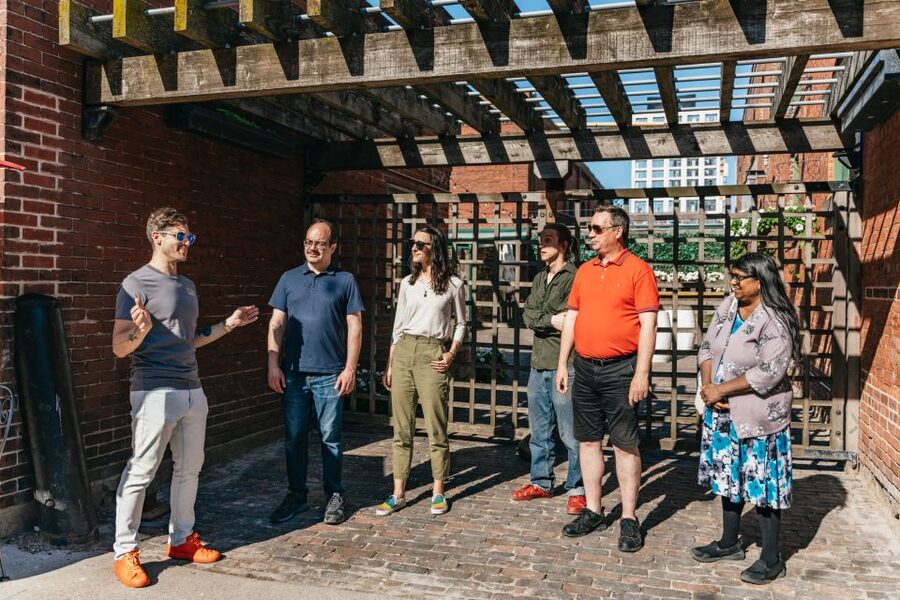
The tour’s most entertaining material concerns Toronto before it became the polished, international city you see today. The early city was closely tied to alcohol, trade, business competition, and social disorder. The phrase a drunk city is not just a joke in this context. It captures the way liquor shaped daily life and commerce.
You will hear stories about the city’s early wild years and the people who built businesses during that period. The tone is lively rather than academic, but the information still explains how Toronto developed.
The social side is important. One guide discussed jobs created for women and the wider effects those jobs had on the community. That detail adds balance to a story that could otherwise focus only on male founders and wealthy business families. You get a better sense of the people affected by the distillery, not just the company leaders.
The shoreline story is another good example of how this tour adds context. The lake was once much closer to the original property than it is today, and the guide explains how the landscape changed. You do not need a separate geography lesson to understand the point: Toronto’s waterfront has been altered over time, and the district’s original relationship with the lake is easy to miss when you stand there now.
Seeing the district beyond the tour route
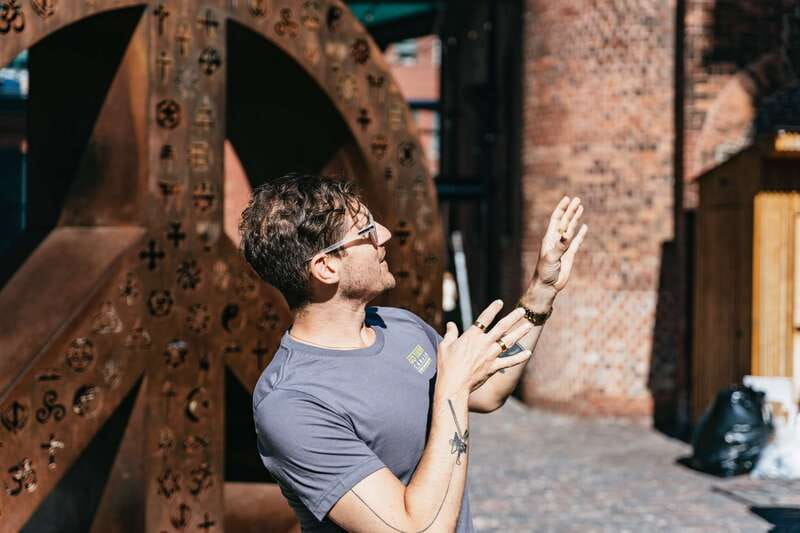
The walking tour takes about an hour, but you should allow more time for the neighborhood itself. The district now includes independent restaurants, bars, boutiques, galleries, theaters, and outdoor sculptures. You can easily continue exploring after the guide leaves you.
This is where the tour works well as part of a wider Toronto day. Take the history walk first, then return to buildings or lanes that caught your eye. The stories give your later wandering more purpose. A wall is no longer just an attractive photo background, and a lane becomes part of an old industrial plan.
The district is also popular with both local residents and people visiting Toronto. That means it can feel more like an active entertainment area than a quiet museum. If you want a silent historic site, this may not suit you. If you like history mixed with food, shopping, art, and people-watching, the setting is a strong match.
Bring a camera, but do not spend the whole hour looking through it. The guide’s explanations are the reason to book, and the architecture will still be there when the walk ends.
What you do not get for $20
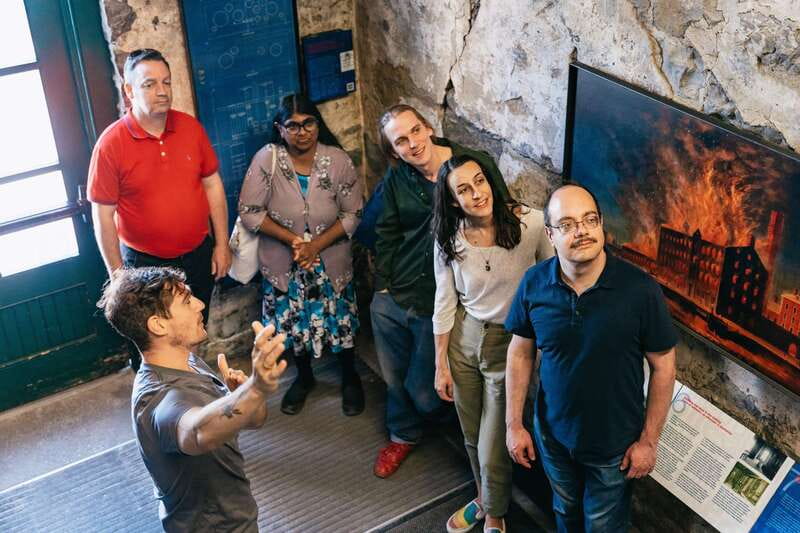
At $20 per person, the tour is a good-value introduction, but the inclusions are specific. You get a one-hour walking tour, a professional English-speaking guide, and sales tax. A food or alcohol tasting is not listed as part of this experience.
Some older tour experiences included chocolate or beer at the end, but you should not book this current history walk expecting those extras. The separate Prohibition & Spirits Walking Tour combines Prohibition and Distillery District history with a flight of spirits at the end. Choose that option if tasting is central to your plans.
The one-hour format is both a benefit and a limit. It is long enough to provide a clear story without taking over your day. It is short enough to fit before lunch or another Toronto attraction. On the other hand, you will not have time to explore every building, examine every sculpture, or ask about every detail.
For me, the value comes from interpretation. You can walk through the district for free, but you will not automatically understand why the buildings are there, how the company affected Toronto, or how much the waterfront changed. The guide turns a pleasant stroll into a focused history lesson.
Guide style and group experience
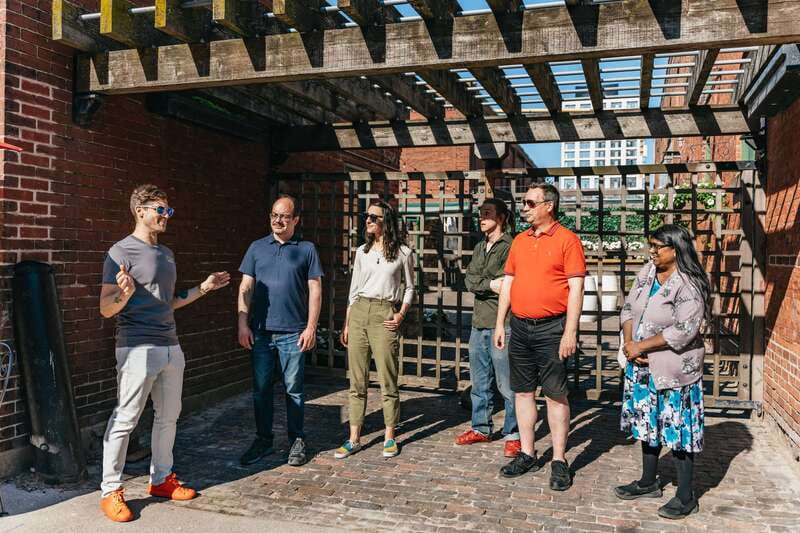
The guide can shape the entire hour. The strongest reports describe guides who use humor, welcome questions, and adjust their approach to the group. Eric and Erik receive repeated praise for passion and energy. Nicole is often described as warm, clear, and willing to give extra time. Tom, Devin, Sarah, David, Milo, and others have also been praised for making the walk personal and engaging.
Small groups can be a real advantage. When only one or a few people arrived, guides still conducted the tour and answered questions rather than treating the experience as an inconvenience. You may get a more conversational walk if your departure has a small group.
Do not expect every guide to deliver the same jokes or the same emphasis. That is normal for a live history tour. The shared strength is the subject matter and the guide’s ability to connect it to the buildings around you.
I would ask questions as you go. The guide is there to explain the district, and several guides have been praised for answering questions openly. If you are curious about the waterfront, the company’s final years, working roles, or the buildings you enter, speak up.
Weather, access, and practical comfort
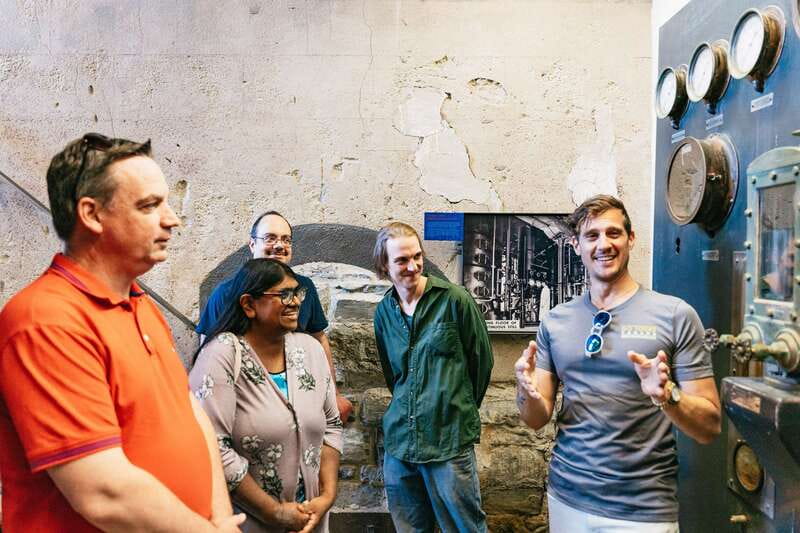
The tour can work in poor weather because the guide may keep more of the route indoors when rain is heavy. Still, this remains a walking tour, so dress for Toronto conditions and wear shoes that handle cobbled surfaces.
Wheelchair access is listed, and the walking level is easy. If you have specific mobility needs, confirm the current route when booking, since access inside individual historic buildings can differ even when the overall activity is wheelchair accessible.
The tour is generally aimed at ages 10 and up. Younger children may enjoy the buildings, but the content focuses on business, alcohol, industry, and city history. Families should decide based on the child’s interest in those subjects.
The experience is conducted in English. You should also carry the requested passport or ID card, even though the walk itself is not described as a border or alcohol-checking activity.
Who should book this walk?
I recommend it most to first-time visitors who want a quick introduction to the Distillery District before exploring it on their own. It also suits Toronto residents playing tourist in their own city. One of the best features of this tour is that familiar streets can become much more interesting once you understand what happened there.
It is a good choice for history fans, architecture lovers, families with older children, and anyone who likes city stories with a little humor. It also works well for people with a tight schedule, since the one-hour format leaves plenty of time for other plans.
I would choose another activity if your main goal is drinking spirits or seeing a production facility in operation. The distillery’s historical story is the focus here, and the old manufacturing period has ended. For tastings, the Prohibition & Spirits option is the better fit.
Should you book the Distillery District Historic Walking Tour?
Book it if you want the buildings to make sense. The $20 fee buys a concise, well-focused introduction to Gooderham & Worts, Toronto’s early liquor trade, changing waterfront, and the people connected to the district.
Skip it if you only have time for a quick photo stop or if alcohol tasting matters more than history. Otherwise, this is an easy, useful addition to a Toronto itinerary. Take the hour with an engaging guide such as Eric, Erik, Nicole, or Devin, then stay in the district for food, shops, galleries, and a slower look at the old industrial streets.
FAQ
How long is the Toronto Distillery District Historic Walking Tour?
The tour lasts one hour.
How much does the tour cost?
The price is $20 per person, including sales tax.
Where does the tour begin?
Check in at the Go Tours Canada office at 11 Gristmill Lane, Toronto, Ontario M5A 3C4. The office is near the red heart at Parliament Street and Mill Street, inside the Distillery District.
Where does the tour finish?
The tour returns to the Go Tours Canada meeting location in the Distillery District.
Is the tour offered in English?
Yes. The live tour guide speaks English.
Is the walking tour wheelchair accessible?
Yes, the activity is listed as wheelchair accessible, and the walking level is easy.
Is alcohol tasting included?
No alcohol tasting is listed as part of this one-hour history tour. A separate Prohibition & Spirits Walking Tour includes a flight of spirits.
What should I bring?
Bring comfortable shoes, a camera, and a passport or ID card.
Is the tour suitable for children?
The tour is generally recommended for people aged 10 and older.
More History Tours in Canada
- Edinburgh: Whisky Tasting with History and Storytelling
★ 4.9 · 2,451 reviews - Bourbon History Tour
★ 5.0 · 219 reviews - San Francisco Whiskey Cocktail Class: Views and City History
★ 5.0 · 206 reviews - 3 Hour Whiskey and History Tour
★ 5.0 · 152 reviews
Just added around Canada
- Victoria BC: Tour & Tasting Around Award Winning Distillery★ 3.8 · 5 reviews
- Victoria Craft Beer and Distillery Tour★ 5.0 · 5 reviews
- Distillery District Breakfast Tour★ 5.0 · 21 reviews
- Toronto Distillery District: Whisky Exploration Game and Tour★ 3.5 · 4 reviews
- Brewery & Distillery Tour (Craft Beer, Spirits, and Cocktails)★ 5.0 · 21 reviews
- Full-Day Wine, Whiskey & Beer Tour w/ Lunch Pairing★ 5.0 · 2 reviews
- Toronto: Nickel 9 Distillery Tour and Tasting★ 5.0 · 2 reviews
- Toronto: Distillery District Breakfast Walking Tour★ 5.0 · 10 reviews
Whisky Walking & Pub Tours, side by side.


Private Guided Food, Bourbon & History Walking Tour
Our verdict →
Dublin 6 Whiskey Tasting & 3 Food Pairing Walking Tour with Local
Our verdict →
Cellar Of Scotland Walking Tour, taste Edinburgh’s finest drinks
Our verdict →
A Wee Walk and a Whisky: Unique Glasgow Walking Tour (5pm)
Our verdict →
Explore Glasgow: Scottish Rogue Whisky Walking Pub Crawl
Our verdict →

Dublin Pub Tour: Guinness Perfect Pour, Whiskey, Music and More
Our verdict →Other lists this dram sits on